Why Opals Crack and Craze: Common Mistakes That Ruin a Stone
Opal has a reputation for self-destructing, and most of the time that reputation is earned — not by bad luck, but by handling. Precious opal is a hydrated form of silica, holding a few per cent of its weight as water inside a lattice of tiny spheres. Let that water escape too quickly, or push the stone through a sharp change in temperature, and the structure answers with a web of fine cracks. Nearly every crazed opal traces back to one of the mistakes below.
What crazing actually is
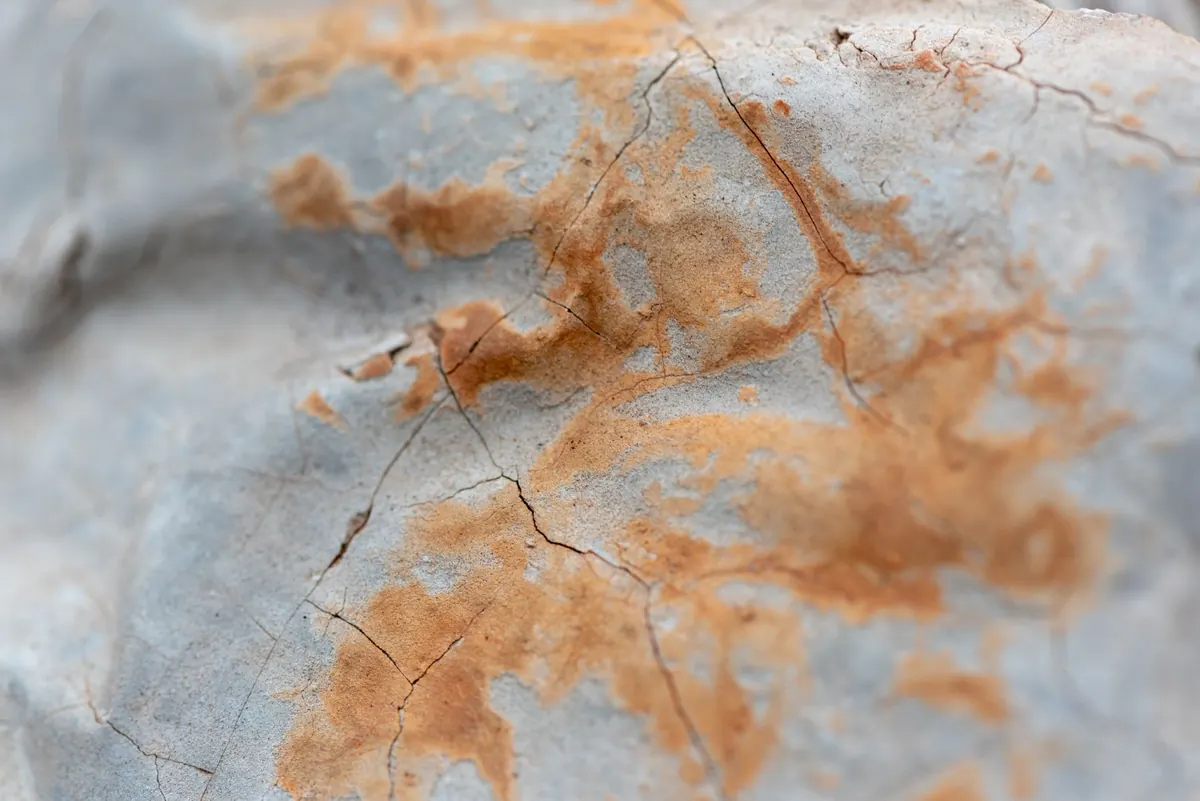
Crazing is not the same as a single break. A crack is one fracture, often caused by impact or a flaw. Crazing is a network of very fine cracks that spreads across the surface and sometimes into the body of the stone. It may look like a spiderweb, a haze of milky lines, or a dull patch that refuses to polish. In bad cases, the opal can begin to flake or crumble along the edges.
The mechanism is simple enough. Opal is made of silica spheres stacked in a repeating pattern, with water and silanol groups helping to hold the structure together. The play-of-color comes from the way light diffracts through that pattern. When water leaves the stone, the spaces between the spheres shrink unevenly. If the surface dries faster than the interior, the outer layer contracts while the inside stays put. The result is stress — and stress shows up as crazing. The same thing can happen when heat makes one part of the stone expand faster than another.
That is why crazing is often a slow-motion accident. It can appear hours after a mistake, or months later. A stone that looked perfect in a dry display case may craze after a few days in a desert climate. A ring that survived years of wear may craze after one afternoon on a hot dashboard.
Common mistakes that ruin a stone
1. Letting it dry out too quickly
This is the classic cause. Opals from humid regions can be stable for decades, but move them to a very dry environment without a transition period and the water inside begins to migrate outward. The mistake is not dryness itself; it is rapid dryness. A stone that is allowed to adjust slowly may be fine. A stone that is placed next to a heater, stored in a bank vault with silica gel, or left in direct sun may not.
Example: a collector buys a beautiful black opal in Australia, flies it to Arizona, and displays it on a sunny shelf. Within a week, fine lines appear across the face. The opal did not “decide” to fail. It was pushed from one humidity level to another too fast.
2. Sudden temperature changes
Thermal shock is the second great enemy. Opal does not conduct heat quickly, so a sudden change can create uneven expansion. Pouring hot water over a stone, using a steam cleaner, or moving a piece from a hot car into air-conditioned air can all trigger damage. Doublets and triplets are especially vulnerable because the adhesive layer can fail, causing the top layer to lift, cloud, or separate.
A useful rule: if the temperature change would make you uncomfortable on bare skin, it is too abrupt for an opal.
3. Rough handling and impact
Opal is softer than many gemstones, usually around 5.5 to 6.5 on the Mohs scale, and it is brittle. A knock against a metal door, a drop on a tile floor, or even a sharp tap against a counter can start a fracture. That fracture may not be visible at first, but it becomes a pathway for water loss and stress. Over time, the damage can spread into crazing.
Rings and bracelets are the most exposed. An opal ring worn during gardening, gym workouts, or moving furniture is an accident waiting to happen. Pendants and earrings are safer because they sit closer to the body and are less likely to hit hard surfaces.
4. Improper cleaning
Ultrasonic cleaners and steam cleaners are common in jewelry care, but they are risky for opals. Ultrasonic vibration can shake loose existing fractures, and steam adds heat. Household chemicals are another problem. Ammonia, bleach, acids, and abrasive polishes can attack the stone or the adhesive in assembled opals. Even repeated soaking can be harmful to doublets and triplets.
Safe cleaning is simple: lukewarm water, a drop of mild dish soap, a soft cloth or very soft brush, then a gentle rinse and blot dry. Do not scrub. Do not soak. Do not use a commercial jewelry cleaner unless it is explicitly labeled safe for opals.
5. Bad storage
Storing opals in the wrong place or with the wrong companions causes damage. Hard stones such as diamond, sapphire, and ruby can scratch opal if they rub against it. Dry storage — a safe, a hot attic, a windowsill — can pull moisture out of the stone. Plastic bags can trap dust and chemicals, and some packaging materials are not kind to opal over time.
Better storage means a soft, padded pouch or a lined compartment, away from direct heat and sunlight. Keep the opal separate from harder gems. If you live in a very dry climate, ask a qualified jeweler about a humidity-controlled case or a slightly humid storage method. Do not experiment on a valuable stone without advice, especially if it is a doublet or triplet.
6. Misunderstanding doublets and triplets
A solid opal is one piece of natural opal. A doublet has a thin layer of opal glued to a backing. A triplet adds a clear quartz or glass cap on top. These assembled stones can be beautiful and affordable, but they have different care rules. Water, heat, and chemicals can weaken the glue, causing cloudiness, separation, or a crazed appearance on the surface. Treating a doublet like a solid opal is a common and expensive mistake.
7. Wearing opal in the wrong setting
Setting matters. A high, unprotected opal in a ring takes every knock. A bezel setting or a design that shields the edges offers more protection. Prongs can also loosen over time, allowing the stone to shift and chip. Have your jeweler check the setting periodically, especially if you wear the piece often.
Early warning signs
Crazing rarely appears without warning. The first signs are often subtle: a loss of sharp play-of-color, a cloudy or milky patch, a faint line near the edge, or a surface that looks slightly dull after cleaning. In stronger light, you may see a web of fine lines that were not there before. If the stone feels rougher than it used to, or if a fingernail catches on an edge, stop wearing it and stop cleaning it.
An opal does not need to be treated like glass, but it does need to be treated like a gem with a memory. Every sudden change is recorded in its structure.
How to prevent crazing
- Keep temperature and humidity as stable as possible. Avoid hot cars, radiators, windowsills, and sudden blasts of dry air.
- Store opals in a soft pouch or lined box, separate from harder gemstones.
- Never use ultrasonic or steam cleaners on opals.
- Clean with lukewarm water, mild soap, and a soft cloth. Dry gently.
- Remove opal jewelry before swimming, showering, cleaning, exercising, or gardening.
- Choose protective settings for rings and bracelets.
- Ask a jeweler about safe long-term storage if you live in a very dry climate
Photo: Malcoln Oliveira / Pexels